
T-Shirt Blog
Direct To Garment Printing
Jan
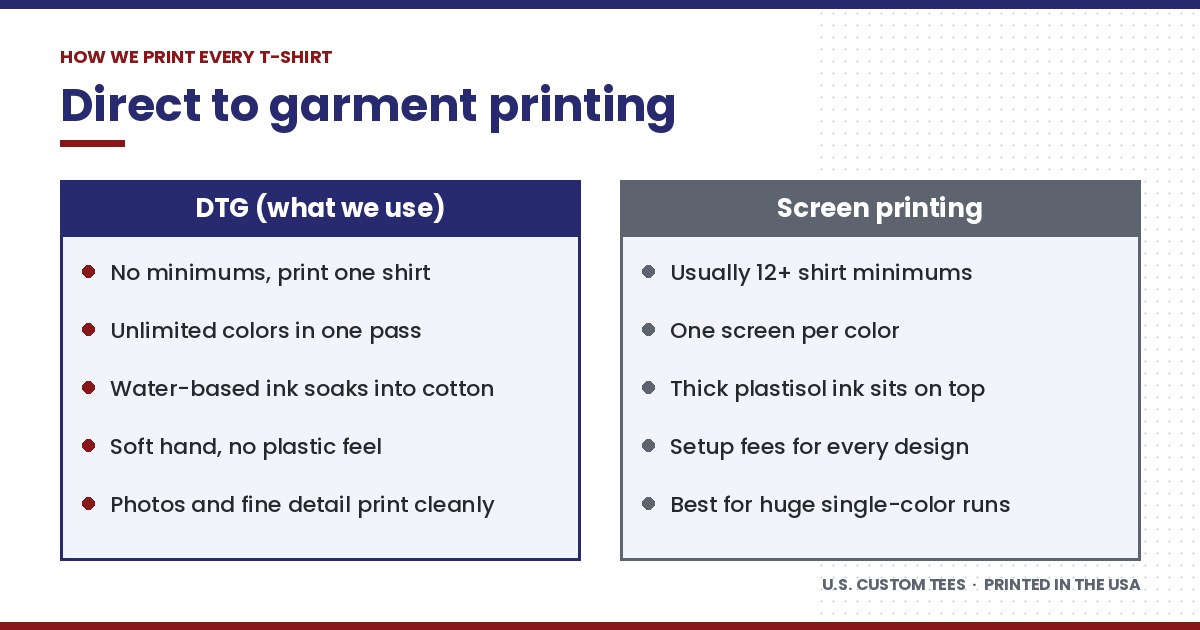
Every t-shirt we sell is printed with direct to garment (DTG) printing, in our own Kentucky shop, one shirt at a time. If you have wondered why we can print a single shirt with no setup fee, why photos come out looking like photos, or why the print feels like part of the fabric instead of a plastic patch, DTG is the answer.
What direct to garment printing is
A DTG printer is an industrial inkjet built for cloth. The shirt is loaded flat on a platen, pretreated so the ink bonds, and the printer lays water-based textile ink straight into the cotton fibers. A heat press cures it. There are no screens, no stencils and no transfer film, which is why one shirt costs the same per shirt as fifty.
Why we print this way
- No minimums. Screen printing needs a screen burned for every color in a design, so shops ask for 12, 24 or 48 shirts to make the setup worth it. DTG has no setup, so we print to order and you can buy exactly one.
- Unlimited color. A photograph, a gradient, a vintage-style flag with a hundred shades of distressing: it all prints in one pass. Screen printing charges per color; DTG does not care.
- A soft hand. The ink soaks into the fabric rather than sitting on top of it, so the print moves and breathes with the shirt. Plastisol screen prints feel like a layer; a DTG print feels like the shirt.
- Water-based ink. The inks we run are water-based, which means no solvents, no plastisol and a cleaner shop.
- Fast turnaround. Because nothing has to be set up, most orders are printed and shipped within 24 to 48 hours.
What prints best on DTG
DTG rewards good artwork. A few things that make the difference between a good print and a great one:
- Resolution. Upload artwork at 300 dpi at the size it will print. A 12 inch wide design wants a file around 3,600 pixels wide. Low-resolution web images print soft.
- Transparent backgrounds. Save as a PNG with the background removed, otherwise the white box around your logo prints too.
- Dark shirts get a white underbase. On black, navy and charcoal the printer lays white first, then color, so bright designs pop. On white and light heathers there is no underbase and the print is the softest of all.
- Cotton loves ink. Every garment we print on is combed ring spun cotton or a cotton-rich blend, chosen because that is what DTG ink bonds to best.
The garments we print on
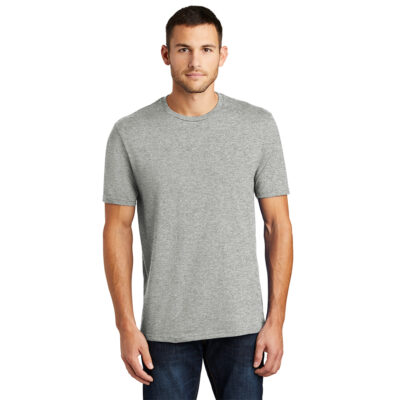
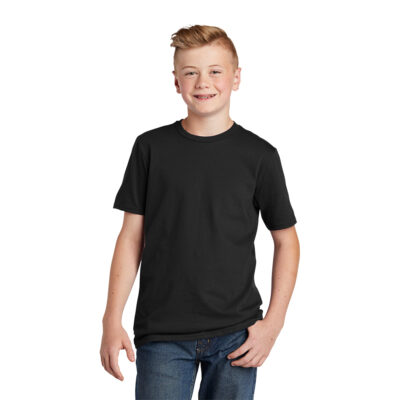
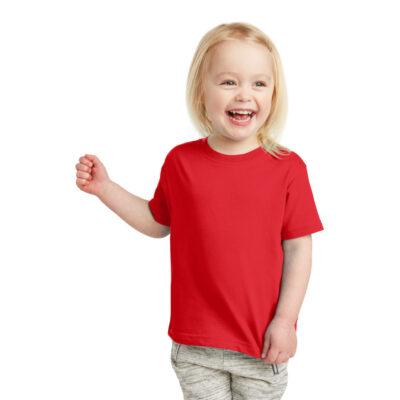
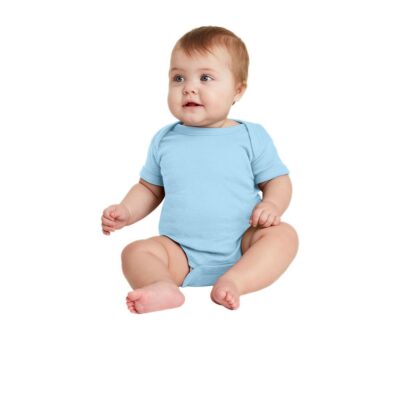
Each one has its own size guide with real measurements so you can order the right fit the first time.
DTG versus screen printing, in one minute
Screen printing is still the right tool for one job: hundreds of identical shirts in one or two solid colors, where the per-shirt cost drops with volume. For everything else, a single shirt, a photo, a full-color graphic, a kids’ size of the same design, a reorder of one more, DTG wins on price, color and feel. That is the whole reason our shop runs on it.
Caring for a DTG print
Wash inside out in cold water, tumble dry low or hang dry, and skip the bleach. Treated that way a DTG print fades gracefully with the shirt instead of cracking off it. The first wash may look very slightly softer than the day it arrived; that is the ink settling into the fibers, and it is normal.
See it on a shirt
Every design in the shop is DTG printed, from state t-shirts to country flags to kids’ sizes. Have your own artwork? Design your own and we will print it the same way. Our matching vinyl stickers are printed in-house too, and you can find more of our graphics on Zazzle and our shirts on Amazon.